

Ever skipped a sleeveless kurta or gym vest, or kept your arms pinned down in a group photo, because your underarms looked darker and patchier than the rest of you? You’re far from alone, and it has nothing to do with being unclean. Choosing the right deodorant for dark underarms can help reduce irritation that often makes darkening worse. Pair it with one or two well-chosen ingredients and a gentler routine, and uneven skin gets a real chance to settle. It’s simpler than the wall of “whitening” roll-ons suggests. Let’s get into it.
Why Do Underarms Get Darker Than the Rest of Your Skin?
Most cases of dark underarms come back to one thing: irritation. Underarm skin is delicate and always moving, so friction from tight clothes, shaving or waxing, and products that sting can all prompt it to make extra melanin, which shows up as darker, patchy skin. In Indian heat and humidity, sweat and synthetic fabrics add to the rubbing. The right deodorant for darker underarms helps by not feeding that cycle.
Not all darkening has the same cause, though. Some people have deeper pigmentation in skin folds, which is completely normal. Others notice skin that’s darker, thicker and almost velvety, which can be a sign of acanthosis nigricans rather than everyday irritation. That difference matters: no deodorant can change your natural tone or treat a medical condition, but a gentle one can stop daily irritation from making things look worse.
What to Look for in a Deodorant for Sensitive Skin
If your underarms are uneven, gentleness matters more than a dramatic promise on the label. Check for these five things.
- Texture: A smooth stick that glides on without dragging or leaving residue, so you’re not rubbing skin that’s already irritated.
- Key ingredients: An odour-neutraliser like zinc ricinoleate, a moisture absorber like tapioca starch, a cushioning butter like shea, and an even-tone ingredient such as kojic dipalmitate.
- What to avoid: Anything that stings, burns or itches after you apply it, and dark-spot products with vague labels. The AAD warns that some have been found to contain steroids or mercury that weren’t listed.
- Transparent labelling: A full ingredient list on the pack or product page, so you can see the actives, the base and whether fragrance is added.
- Sensitivity check: Try a new deodorant on a small patch of your inner arm for a few days first, and skip fragrance altogether if your skin reacts easily.
Notice what isn’t on the list: overnight “whitening”. Healthy underarms come in many shades, and the goal is calmer, more even skin, not a different colour.
Kojic Acid for Dark Underarms: What it Does?
Kojic acid for dark underarms is about evening out tone, not bleaching skin. The American Academy of Dermatology lists kojic acid among non-prescription ingredients that can fade dark spots, and in some cases it can slow melanin production. Kojic dipalmitate is a more stable, oil-soluble derivative of kojic acid, which is why it suits oil-based deodorant sticks.
You’ll also spot niacinamide and exfoliating acids like lactic, glycolic or salicylic acid in many underarm roll-ons. Acids can help some people, and glycolic acid is on the AAD’s list, but they can sting freshly shaved or waxed skin, which is the very irritation you’re trying to avoid. Whatever you choose, dermatologists recommend a simple order:
- Stop the trigger first: The American Academy of Dermatology says getting rid of hyperpigmentation begins with finding the cause. Once the cause stops, many dark spots clear on their own over time.
- Go gentle: The AAD notes that a skin care product that irritates your skin can cause dark spots. It suggests gentler products labelled “for sensitive skin” or “fragrance-free”, and stopping anything that burns or stings.
- Then add an even-tone ingredient: Once the cause is gone, the AAD says a product that evens out skin tone tends to be more effective, and it names azelaic acid, glycolic acid, kojic acid, retinoids and vitamin C.
If the darker skin feels thick or velvety, appears suddenly, or keeps spreading, see a dermatologist before trying stronger products. This thick, velvety darkening is called acanthosis nigricans. The American Academy of Dermatology (AAD) notes that it isn't harmful in itself but can sometimes be a warning sign of prediabetes, and that scrubbing won't remove it.
Our Picks for Uneven Underarms: Aluminium-Free Deodorant Sticks
Both picks are aluminium-free sticks, handcrafted in small batches in Bengaluru on the same base: zinc ricinoleate to neutralise odour and tapioca starch to absorb moisture, plus shea butter, sunflower seed oil, vitamin E and kojic dipalmitate. The only real difference is scent.
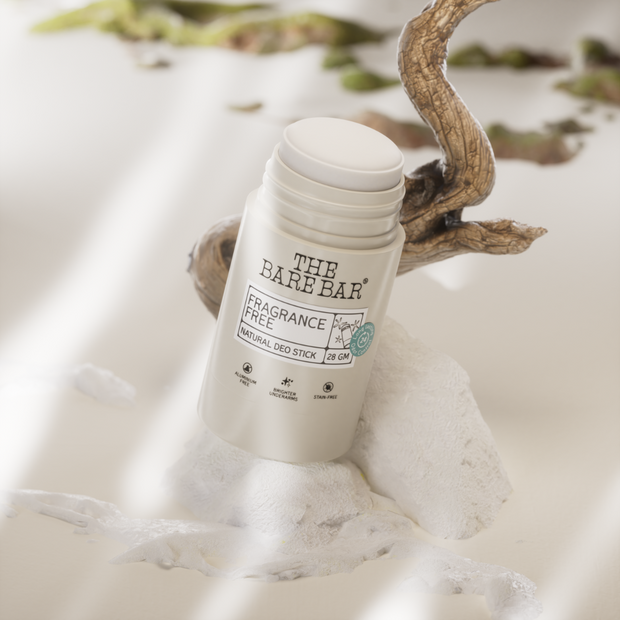
- Fragrance Free Deodorant Stick: Looking for a deodorant for sensitive skin? Start with the one that leaves fragrance out. It’s gentle on delicate underarm skin, neutralises odour at the source with zinc ricinoleate, absorbs excess moisture with tapioca starch and leaves a dry-touch, non-sticky finish. Kojic dipalmitate helps visibly brighten underarms over time with regular use.
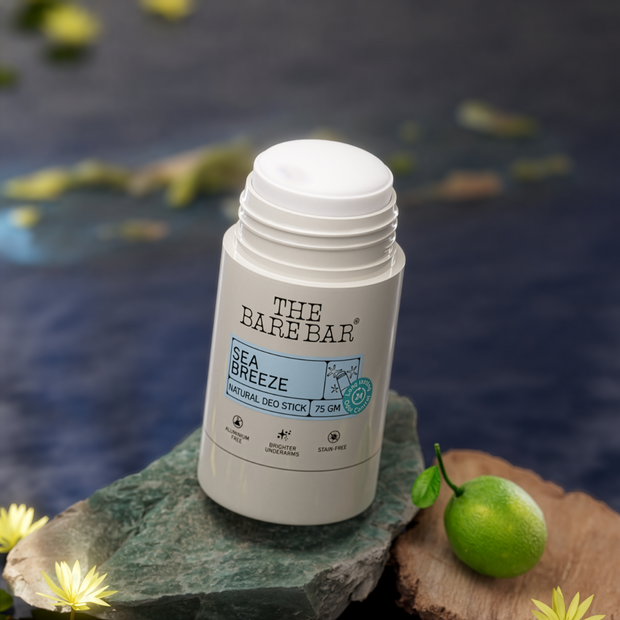
- Sea Breeze Deodorant Stick: For anyone who enjoys a crisp, clean scent inspired by the open ocean. It offers long-lasting odour protection while caring gently for delicate underarm skin, and it’s made without baking soda, aluminium and phthalates.
| Feature | Fragrance Free Deodorant Stick | Sea Breeze Deodorant Stick |
|---|---|---|
| Scent | No added fragrance | Crisp, clean and inspired by the open ocean |
| Best for | Sensitive underarms and anyone who reacts to scent | Anyone who wants a scent that stays with them through the day |
| Key ingredients | Zinc ricinoleate, tapioca starch, shea butter, sunflower seed oil, vitamin E, kojic dipalmitate, spirulina extract | The same base, plus IFRA-certified fragrance |
| Odour control | Up to 24 hours | Up to 24 hours |
| Made without | Aluminium, baking soda, phthalates | Aluminium, baking soda, phthalates |
| How it feels | Glides on without residue; gentle for everyday use | Glides on without residue; gentle for everyday use |
| Vegan | Yes | Yes |
| Sizes | 28 g (up to 45 days) and 75 g (up to 90 days) | 28 g (up to 45 days) and 75 g (up to 90 days) |
Not sure which to choose? Start with Fragrance Free if your underarms sting easily or you’ve recently shaved or waxed. Pick Sea Breeze if your skin is happy with fragrance and you want a scent that stays with you through the day.
Dark Underarms: Small Daily Tweaks, Big Difference
The right deodorant does its part; these habits stop you undoing it.
- Wash your underarms with lukewarm water and a gentle, sulphate-free and soap-free cleanser like the Rose and Oats Body Wash, with a soft, creamy lather. Skip the rough loofah, because scrubbing harder adds friction rather than lifting darkness.
- Time your hair removal by shaving at night, so skin can settle before your morning deodorant. After waxing, give your underarms a day or two before applying anything new.
- Shave on wet skin with a sharp, clean razor and a shaving gel, go in the direction of hair growth, and change the blade after five to seven shaves, as the AAD advises, to keep irritation down.
- One or two gentle swipes of deodorant is all you need; pressing hard or layering on extra product only adds friction.
- Pat your underarms completely dry before applying, and give the deodorant a few seconds to settle before you dress. If you’re moving from an antiperspirant to an aluminium-free deodorant, expect a few days of adjustment.
- On hot, humid days, choose loose, breathable cotton and change out of sweaty gym wear quickly, since tight fabric and trapped sweat keep underarm skin rubbing and irritated.
Uneven underarms didn’t appear overnight, and they won’t even out overnight either. Keep your routine gentle and consistent, stop anything that stings, and give an even-tone ingredient like kojic dipalmitate time to work. For context, the AAD says that once the cause of darkening is removed, a spot a few shades darker than your natural tone usually fades within 6 to 12 months. Check in every few weeks, and look for calmer, less irritated skin as the first sign you’re on track.
Frequently Asked Questions on Deodorant for Dark Underarms
Which is the best deodorant for dark underarms?
The best one doesn’t sting, lists every ingredient, keeps odour in check without irritating your skin, and includes an even-tone ingredient such as kojic dipalmitate. If your underarms react easily, the Fragrance Free Deodorant Stick is a good place to start: no added fragrance, a full ingredient list, aluminium-free odour control and kojic dipalmitate for a more even-looking tone. Patch test first, as every skin is different.
What causes dark underarms?
The most common causes are friction, irritation from shaving or waxing, and products that sting, all of which can trigger extra melanin. Skin tone plays a part too, and sometimes the cause is acanthosis nigricans, which makes skin darker, thicker and velvety and is worth showing to a dermatologist.
Does deodorant cause dark underarms?
Not usually on its own, but a deodorant that irritates your skin can contribute. The AAD notes that skin care products that irritate can trigger dark spots, so if a formula stings, burns or itches, stop using it and switch to a gentler, ideally fragrance-free option.
How long does it take to see a difference?
Expect months rather than days. Once the trigger is gone, the AAD says a spot a few shades darker than your usual skin tone usually fades within 6 to 12 months, while deeper discoloration can take years. Steady, gentle care beats switching products every few weeks.
When should I see a dermatologist?
See a dermatologist if the darker skin feels thick or velvety, appears suddenly, keeps spreading, or hasn’t improved after a few months of gentle care. A dermatologist can tell everyday irritation apart from acanthosis nigricans, which the AAD says can sometimes be a warning sign of prediabetes.
